

The VA Funding Fee, Explained for Metro Atlanta Veterans
A Metro Atlanta REALTOR® on the one-time fee behind the no-down-payment VA loan, how each use changes it, and which veterans owe nothing
The VA loan comes with two headline advantages that most buyers hear about right away: no down payment required, and no monthly mortgage insurance. Close behind them on the paperwork is a third item that deserves the same clear treatment, the VA funding fee. It is a real number that is worth understanding, and once it makes sense tends to feel a lot less complex.
The funding fee is a one-time charge on most VA home loans that goes to the VA itself. It is not a lender fee, and it is not profit for anyone in the transaction. It is what keeps the VA loan program funded and available for the next generation of buyers, which is the whole reason it exists.
Why the fee is there in the first place
On a conventional loan, a buyer who puts down less than 20 percent usually pays private mortgage insurance (PMI) every single month, often for years. That is money added to the mortgage payment monthly until the loan is paid down enough for PMI to be cancelled. The VA loan does something different. Because the VA guarantees a portion of the loan for the lender, there is no monthly mortgage insurance at all.
The funding fee stands in for PMI. Instead of a monthly insurance premium that stretches on for years, the VA charges one fee, one time, and the buyer never pays another penny. For most veterans, that trade works out well over the life of the loan.
And the fee does not have to come out of pocket at closing. It can be financed into the loan, which is how many buyers handle it, or a seller can agree to cover it as part of the sale. On a VA purchase, a seller-paid funding fee counts toward the 4 percent seller concession limit. There is more on how that rule works in The VA Seller Concession Rule: What the 4% Really Covers.
What the fee costs
The funding fee is a percentage of the loan amount, and that percentage changes based on two things: whether this is the veteran's first time using the VA loan benefit, and how much of a down payment is made. A larger down payment lowers the fee, and a first-time use costs less than a later one.
Here is how the 2026 rates line up for the most common situations:
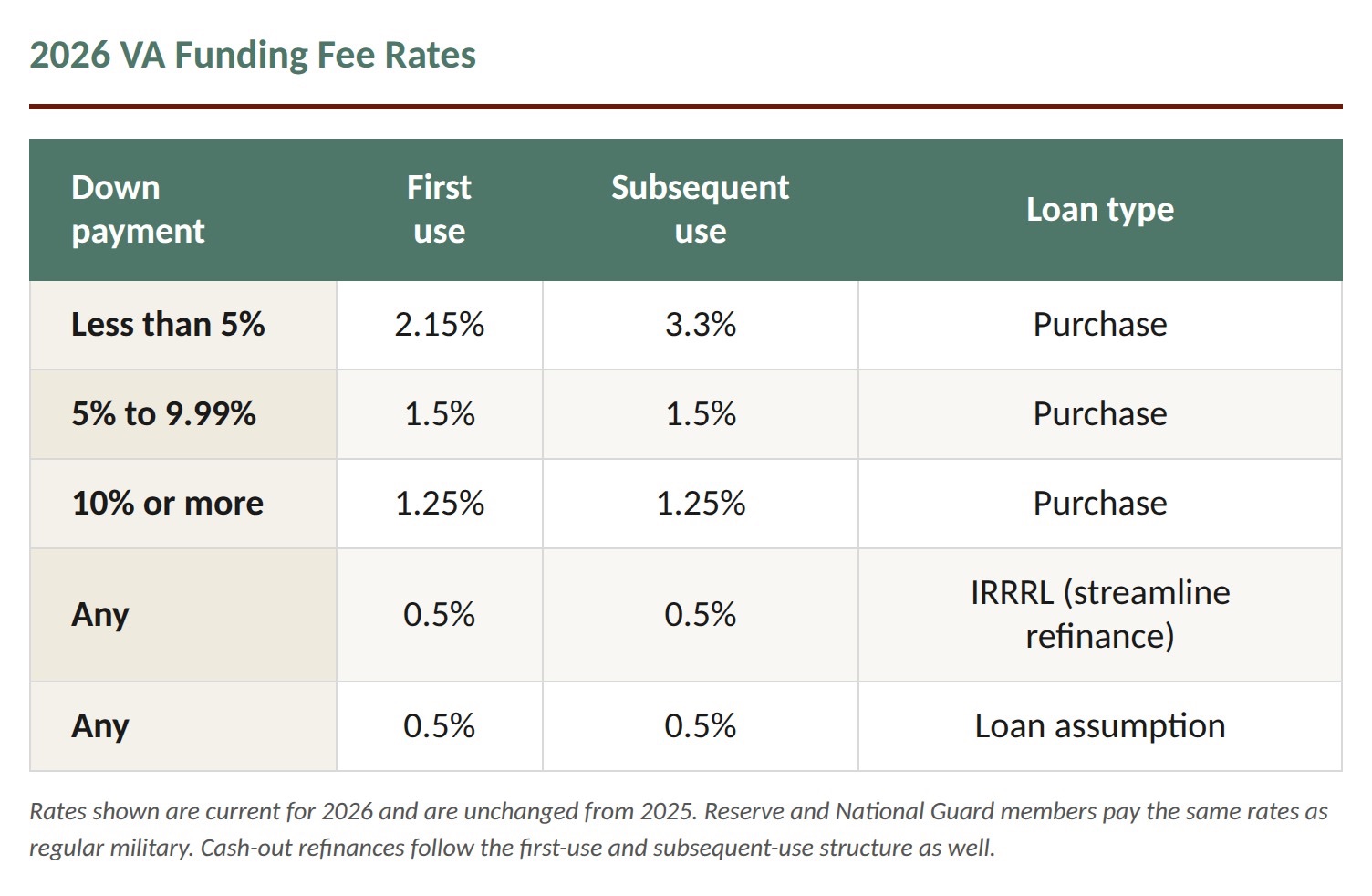
A quick read of that table: a first-time buyer going in with no money down is looking at roughly 2.15 percent of the loan amount. A veteran who has used the benefit before and again puts nothing down lands closer to 3.3 percent. Putting five or ten percent down brings both of those numbers down noticeably. The streamline refinance sits far lower, at half a percent.
Those percentages apply to most veterans. A significant group, though, pays no funding fee.
Who pays nothing at all
A large group of veterans are exempt from the funding fee completely. Not reduced. Zero. Under VA rules, the funding fee is waived for:
- Veterans receiving VA compensation for a service-connected disability
- Veterans who would be entitled to that compensation but for retirement or active-duty pay
- Certain veterans rated eligible for compensation through a pre-discharge exam or review
- Surviving spouses of veterans who died in service or from a service-connected disability
- Purple Heart recipients serving on active duty
The exemption is one of the most valuable pieces of the whole VA benefit, and also one of the most commonly missed. The VA's own review found that tens of thousands of exempt veterans have been mistakenly charged the fee over the years. On a typical Metro Atlanta purchase, that exemption is often several thousand dollars that never should have been charged in the first place.
If any of the above categories fit your situation, the exemption is there for you to claim. It is part of the benefit you earned, and confirming it is applied correctly at closing is a simple, impactful step.
A note on the 2026 tax change
There is one recent development worth mentioning. Beginning with tax year 2026, the VA has stated that borrowers may be able to deduct the funding fee on their taxes when buying with a VA-backed mortgage. How that applies to any one veteran depends on their own tax situation, so it is a good question for a tax professional, but it is a genuinely new and favorable modification worth knowing about.
Where this leaves a Metro Atlanta veteran
The funding fee is not the catch that some buyers worry it might be. It is a one-time cost that replaces something conventional buyers pay every month, it can be financed or covered by a seller, and for a large share of veterans it disappears entirely through the exemption. Understanding it up front means one less surprise at the closing table, and one more part of the benefit working the way it was meant to.
If you are a veteran or service member considering a home in North Metro Atlanta, I am glad to walk through what your own numbers might look like and connect you with lenders who know this benefit well. You have earned it, and it should work in your favor at every step.
Michelle Campbell | Campbell Group at Epique Realty | campbellgrouprealty.com
Categories
Recent Posts